Your First Obstacle Race: The Beginner Woman's Guide to Mud, Walls and Finish Lines
From the outside, obstacle course racing looks like an insurance liability convention: walls, mud pits, barbed wire, people paying money to crawl. From the inside, it is one of fitness’s best-kept secrets for beginners: races built on camaraderie rather than competition, obstacles with skip options and helping hands, and a finish-line feeling that converts one-time bucket-listers into annual repeaters at remarkable rates. For women wanting a training goal with an adventure attached, the mud is calling. Here is the complete first-race guide.

Why OCR Is Secretly Beginner-Friendly
The culture correction: obstacle racing’s brand is intensity but its operating culture is mutual aid — helping strangers over walls is tradition (at most events, literally nobody summits the tall walls alone), obstacles are attempt-optional (skip it or do penalty exercises and continue — no disqualification, no shame economy), waves are self-seeded (beginners start together in later waves where the vibe is costumes and encouragement, not elbows), and the format flatters generalists (you do not need to be a fast runner or strong climber — the mix rewards being okay at several things, which is most women’s honest profile). The demographic data backs the vibe: women are OCR’s fastest-growing segment, and the all-women waves and teams at major races exist because organizers noticed. The wall is real. So are the six hands that appear when you reach it.
Choosing Your First Race (Distance and Brand Decoded)
The menu, sorted for debuts: local mud runs and charity 5K obstacle events (the softest entry — shorter, cheaper, fewer and friendlier obstacles; the training-wheels race that many women wisely take first), Spartan Sprint (the branded classic starter: 5K-ish with ~20 obstacles — a real challenge with the full race-day production; the burpee-penalty tradition applies to failed obstacles, scaled kindly in open waves), Tough Mudder’s shorter formats (the untimed, teamwork-maximal brand — obstacles built for group-solving; the choice if camaraderie outranks clock for you), and the timing wisdom: pick a race 10–14 weeks out (training runway covered next), choose late-morning open waves (warmer mud, beginner energy), and recruit even one teammate (the with-a-friend first race is the consensus recommendation — pacing, photos and shared mythology included, though solo racers get adopted by strangers within the first mile, reliably). Register before training. The paid entry is the plan’s engine.
The 10-Week Training Plan (Run, Grip, Crawl)
The three-pillar preparation: running base (OCR is a run interrupted by problems — build to comfortably covering the race distance with walk breaks: three runs weekly, one longer, following any couch-to-5K logic; trail running once weekly if accessible, since race terrain is trail-shaped), grip and pull strength (the differentiator on race day — dead hangs building toward 45–60 seconds, rows and band pulldowns twice weekly, and the pull-up progression for the ambitious: monkey bars and rope obstacles run on grip, and grip is trainable fast), and functional movement (the crawl-carry-climb vocabulary: bear crawls, walking lunges, farmer carries with heavy groceries or dumbbells, box or bench step-ups, and burpees — both as penalty-insurance and because burpees are OCR’s love language). Weekly template: three runs, two strength sessions, one rest, one hike-or-play day. The plan’s honest secret: race-day fitness matters less than race-day willingness — train enough to move for the duration, and the obstacles sort themselves with help.
Race-Day Tactics (Gear, Pacing and Mud Management)
The veteran knowledge, transferred: wear snug synthetic everything (cotton absorbs mud-water into a wearable swamp — fitted leggings and tops shed it; this is the single most-repeated gear rule in the sport), shoes with aggressive tread you are willing to sacrifice-or-donate (many races collect finisher shoes for cleanup charity — the muddy-shoe afterlife is planned for), skip the fresh manicure and jewelry (grip needs and mud archaeology respectively), pace like a hiker not a racer (walk early and often — the beginners who blow up ran the first mile like it was a 5K PR attempt; it is not: it is a half-day adventure with running segments), attempt everything with the skip option held loosely (the obstacle you fear usually goes better than the one you dismissed), accept every offered hand and offer yours (the culture is participatory — helping someone over a wall is half the memory), and stage the finish-line logistics: towel and complete outfit change in the car, trash bag for the mud clothes, and the post-race shower truck line as part of the experience. The mud gets everywhere. That was disclosed in the name.
The Finish-Line Effect (Why First-Timers Become Regulars)
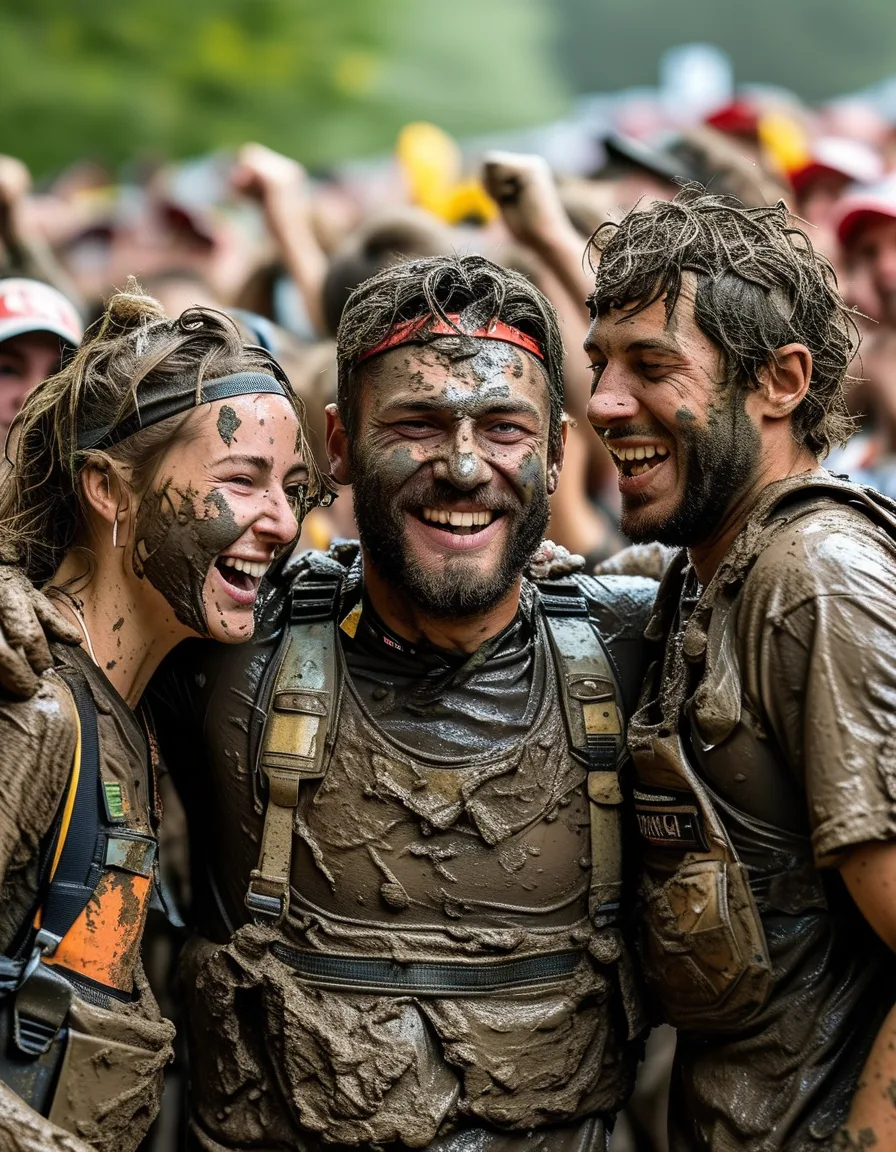
The conversion phenomenon worth understanding before you experience it: OCR finish lines hit different — the medal arrives mud-crusted after a morning of small fears faced serially (the wall, the crawl, the cold water — each a miniature exposure-therapy session with cheering), the photos are objectively hilarious and objectively triumphant simultaneously (the mud-grin finish photo has a fridge-door half-life measured in years), the fitness identity shift is documented in the community’s testimonials (I am someone who does obstacle races reorganizes a person’s relationship with training — the gym sessions afterward have a why), and the ladder extends invitingly (Sprint to Super to the team relays to the all-women events — the sport scales with the appetite it creates). The warning, offered with love: first-timers who swore one and done are the sport’s most reliable repeat-registration demographic. Budget accordingly. The mud, it turns out, is habit-forming — and the woman who climbs out of it at the finish has receipts about herself that no treadmill ever printed.
Obstacle racing, demystified for debuts: a mutual-aid culture wearing an intimidating brand, a first race chosen at Sprint-or-softer distance 10–14 weeks out, training built on runs-grip-crawls, synthetic clothes and sacrificial shoes on the day, and a finish-line effect that converts skeptics with mud-crusted reliability. Register for the fall race tonight — the entry fee is the commitment device, the wall has hands waiting, and the fridge has been needing that photo. See you in the mud.
Keep Reading
This article is for general informational and styling purposes only. Fit, sizing, and product availability may vary.