What to Actually Eat Before an Obstacle Course Race
Quick Answer: Eat a carb-focused meal 2-3 hours before the race, keep fat and fiber low to avoid GI issues on obstacles, and prioritize hydration with electrolytes over plain water in the hour before start.
You’ve dialed in your running fuel strategy, but obstacle races throw a curveball — your gut takes a very different beating when it’s bouncing through mud and hanging off rings, not just pounding pavement.

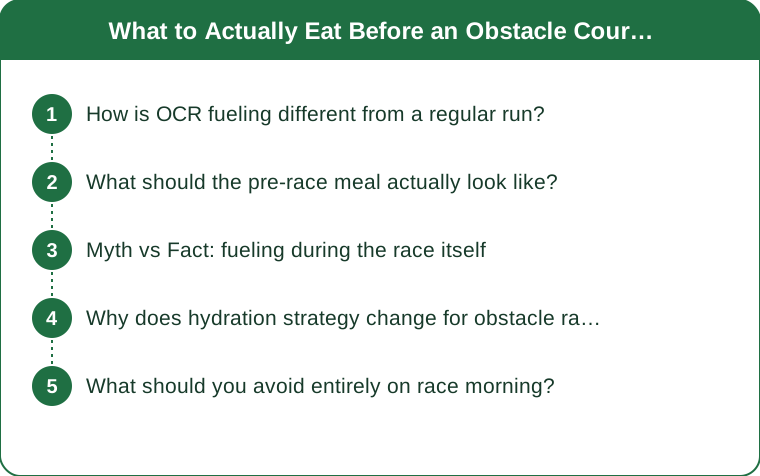
How is OCR fueling different from a regular run?
A standard trail or road race is continuous steady effort; an OCR alternates hard bursts (walls, carries, crawls) with running, which spikes and drops your heart rate constantly. That inconsistency makes a heavy stomach much more punishing — nausea and cramping show up faster than in steady-state running.
This is why OCR athletes generally eat lighter and simpler pre-race than distance runners doing a similar total time on course.
What should the pre-race meal actually look like?
Aim for 200-400 grams of easily digestible carbs 2-3 hours out — think oatmeal, a bagel with honey, or a banana with rice cakes. Keep fat and fiber low in this window since both slow digestion and are more likely to cause GI distress once you’re inverted on a monkey bar rig.
A small amount of protein is fine but isn’t the priority here — this meal is about topping off glycogen, not muscle repair.

Myth vs Fact: fueling during the race itself
Myth: OCR races are short enough that mid-race fuel doesn’t matter. Fact: many competitive and open-wave OCRs run 60-120+ minutes with heavy grip and carry demands — a gel or chews around the 45-60 minute mark can meaningfully delay the grip fatigue that ends most people’s obstacle attempts.
Myth: sports drinks are enough on their own. Fact: sports drink alone often isn’t enough carb density for longer OCR distances; solid or gel fuel adds what liquid alone can’t cover without overloading your stomach with volume.
Why does hydration strategy change for obstacle races?
You’re sweating heavily but also frequently submerged or soaked from water obstacles, which makes it easy to underestimate fluid loss because you don’t feel ‘dry.’ Electrolyte intake matters more here than in a dry-weather run, since grip strength — critical for rig obstacles — drops noticeably with even mild sodium depletion.
Sipping an electrolyte drink in the 60-90 minutes before start, rather than chugging water right at the line, keeps you hydrated without a sloshing stomach on the first wall.
What should you avoid entirely on race morning?
High-fat foods (bacon, heavy dairy, fried anything), high-fiber foods (large salads, beans, bran), and anything genuinely new to your gut. Race morning is not the time to try a new energy bar — test any fuel during a training run first.
This is general information, not a substitute for guidance from a sports dietitian if you have specific GI sensitivities.
TL;DR:
- Eat 200-400g easily digestible carbs 2-3 hours before start, keep fat and fiber low
- Fuel mid-race for anything over 60 minutes — grip fatigue is often a fueling problem, not just a strength one
- Prioritize electrolytes over plain water, especially since water obstacles mask real fluid loss
- Never test new fuel on race day
OCR fueling is less about carb-loading like a marathon and more about protecting your gut and grip through a chaotic hour — plan for the chaos, not just the distance.
Keep Reading
This article is for general informational and styling purposes only. Fit, sizing, and product availability may vary.