The 10-Week Obstacle Race Training Plan: Running, Grip and Crawl-Ready Strength
The obstacle race asks for a strange athlete — a runner who can hang, a lifter who can crawl, a climber with an engine — and ten weeks is enough to build a credible first version. The OCR training plan: the demands, the phases and the skills.

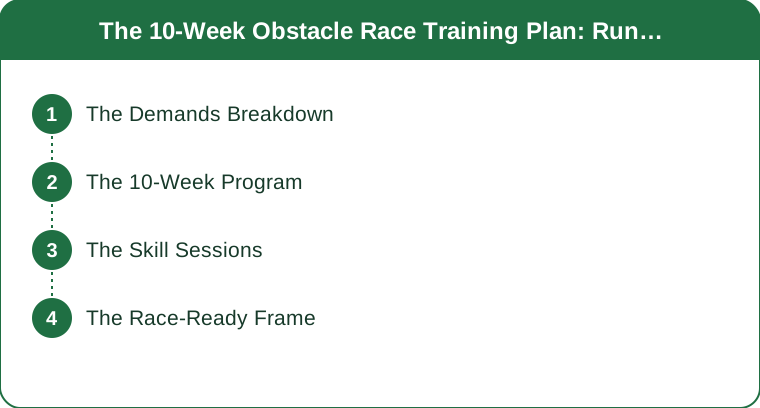
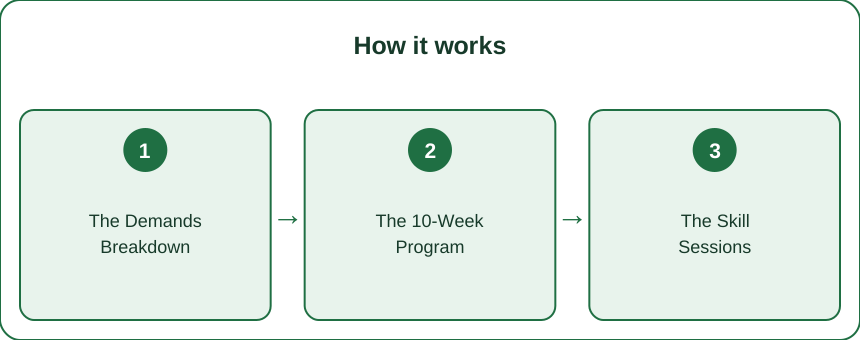
The Demands Breakdown
What the course actually tests: the running spine (the 5-to-15k of trail running between obstacles — the race being mostly running per the first-race doctrine; the hilly-trail specificity over road miles), the grip economy (the hangs, carries, rigs and walls all drawing from one grip account — the forearm endurance from the grip doctrine being OCR’s signature currency), the crawl-and-climb strength (the pulling power for walls and ropes — the push-crawl endurance for the mud tier; the burpee reality of failed obstacles at some race series), the load-carry segments (the bucket-and-sandbag carries — the loaded-walk strength from the carry doctrine), and the honest self-audit (the current 5k time, the dead-hang seconds, the pull-up status — the three numbers that set the program’s emphasis; the runner training grip, the lifter training miles).
The 10-Week Program
The phased build: weeks 1-3 the base phase (three runs weekly — one easy-long on trails, one interval, one comfortable; two strength sessions — the squat-hinge-pull-carry core from the lift doctrine; the dead-hang habit started: the daily 30-second accumulations), weeks 4-6 the specificity phase (the runs continued with hill emphasis — the strength sessions gaining OCR flavor: the towel-grip rows, the bucket carries, the bear crawls; the hang time grown toward 60-plus seconds; the pull-up progression per the assisted-ladder doctrine), weeks 7-9 the integration phase (the brick sessions from the HYROX doctrine — the run-obstacle-run rehearsals: the trail run broken with carry-and-crawl stations; the playground-and-outdoor-gym circuits from the outdoor doctrine; the longest run reaching race distance), week 10 the taper (the volume halved, the intensity touched lightly — the race-week doctrine; the kit rehearsed per the nothing-new rule), and the weekly shape (five training days, two full rest — the recovery doctrine holding the ambitious back from the injury tier).

The Skill Sessions
The obstacle-specific craft: the wall technique (the run-up foot plant and the hip-pop-over — the efficiency that saves arms; the practice walls found at outdoor gyms or race-training days), the rope-climb progression (the foot-lock taught from a bench — the J-hook and S-wrap options; the legs-do-the-work truth that saves the grip account), the rig strategy (the monkey-bars-and-ring traverses — the momentum-swing craft over the static hang; the commit-and-move doctrine; the grip saved by speed), the carry pacing (the bucket-and-sandbag segments walked steady — the set-down protocol that beats the drop-and-despair), the mud-and-crawl notes (the low-crawl rhythm and the shoe-choice traction from the gear doctrine), and the failure protocol (the obstacle attempted, failed and penalized being FINE — the burpees done with rhythm; the race continued; the retry economics judged mid-race per the pacing doctrine).
The Race-Ready Frame
The final pieces: the kit list (the trail shoes with drainage, the fitted synthetic layers — the cotton ban from the race doctrine; the gloves debate settled by rig-practice testing), the fueling plan (the pre-race meal and the gel-per-hour tier for the long courses — the fuel doctrine applied), the pacing wisdom (the first kilometer slower than excitement wants — the obstacle queues as forced recovery; the grip-account budgeting across the course), the team-versus-solo choice (the pack dynamics from the team-racing doctrine — the friends who boost walls being both literal and moral support), the expectations calibration (the first race’s goal being finish-with-a-smile — the time goals deferred per the first-race doctrine; the photos at the fire jump being mandatory), and the hook warning (the finisher-medal effect — the second race booked within a week being the documented pattern; the training plan you’ll want again, now with data; the strange athlete, built in ten weeks, hooked for seasons). Run the trails, bank the hang time, session the skills: the course, ready for you.
Ten weeks: base running and strength (1-3), OCR-specific grip, carries and hills (4-6), run-obstacle brick sessions (7-9), taper (10). Daily dead-hangs are the signature investment — grip is OCR’s currency and legs-first rope technique protects the account.
Keep Reading
This article is for general informational and styling purposes only. Fit, sizing, and product availability may vary.