Why Your Grip Fails Mid-OCR Race — It's Not Just Hand Strength
Quick Answer: OCR grip failure is mainly caused by forearm muscular endurance running out, not a lack of maximum grip strength — most racers can grip a bar hard for a few seconds fine, but sustained or repeated grips under fatigue is a different capacity entirely. Training grip endurance (timed hangs, varied grip types) closes this gap faster than pure strength work.
You can crush a handshake and do farmer’s carries with heavy weight, yet your grip still gives out halfway across a rig — that’s because racing grip failure is an endurance problem, not a strength problem.

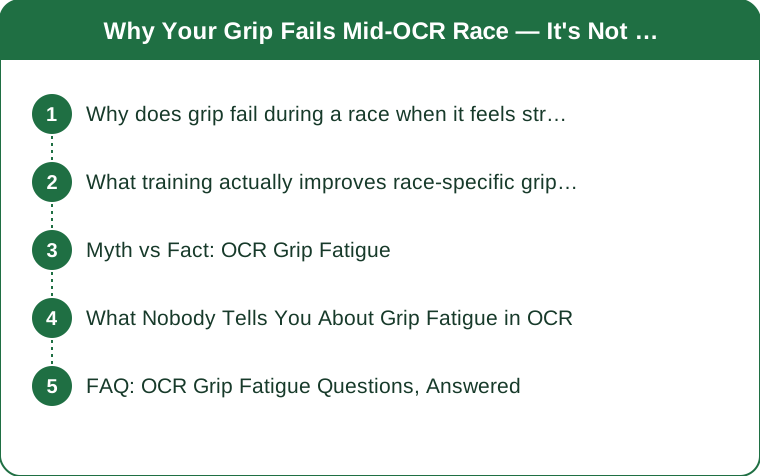
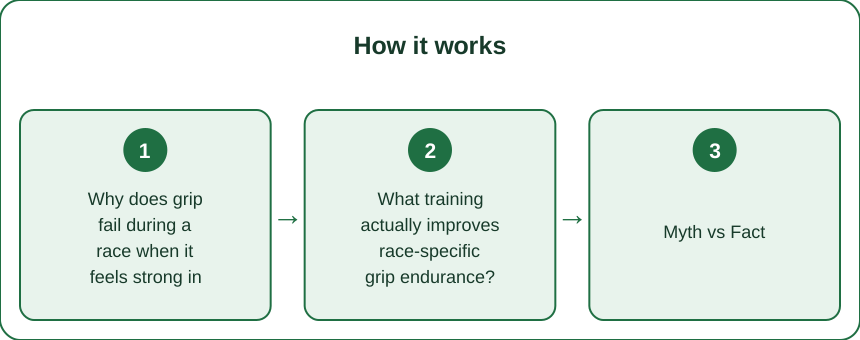
Why does grip fail during a race when it feels strong in the gym?
Maximum grip strength and grip endurance are different physical qualities. A strong one-time squeeze uses different muscle fiber recruitment than sustained or repeated gripping across multiple obstacles over a long race, where forearm fatigue accumulates continuously.
Racers often train grip strength (like a single hang or deadlift hold) without training the sustained, repeated grip demand that actually shows up mid-race — which is why gym-strong grip doesn’t always transfer.
What training actually improves race-specific grip endurance?
Timed dead hangs progressing in duration (start at 20-30 seconds, build toward 60+) train sustained grip endurance directly. Varying grip types in training — thick bars, rings, ropes, angled grips — matters too, since races rarely repeat the same grip surface twice, and narrow training on one grip type leaves others undertrained.
Farmer’s carries for distance, not just weight, also build the specific endurance pattern OCR demands better than heavy, short-duration grip work alone.

Myth vs Fact: OCR Grip Fatigue
Myth: The strongest grip in the gym wins on race day. Fact: Grip endurance under repeated, varied demand matters more in a race than peak one-time grip strength.
Myth: Chalk or grip aids fix an underlying endurance problem. Fact: Grip aids reduce slip but don’t address forearm fatigue — they help at the margins, not as a substitute for endurance training.
Myth: Training grip on one type of bar prepares you for all obstacles. Fact: Different grip surfaces (rings, ropes, angled bars) recruit forearm muscles differently — narrow training leaves real gaps on race day.
What Nobody Tells You About Grip Fatigue in OCR
Grip fatigue is often the true limiter behind obstacles that look like upper-body strength failures — racers frequently blame a failed rig on ‘not being strong enough’ when the actual cause was forearm endurance running out several obstacles earlier, with the failure just showing up later.
Shaking out your forearms between grip-heavy obstacles, even briefly, measurably delays fatigue accumulation — a small recovery habit most racers skip entirely mid-race.
FAQ: OCR Grip Fatigue Questions, Answered
How long before a race should I start grip endurance training?
At least 6-8 weeks, since forearm endurance adaptations build more slowly than general strength gains.
Do grip strengtheners (the squeeze tools) actually help for OCR?
Somewhat, but they train a different pattern than sustained hanging grip — useful as a supplement, not a replacement for hang and carry work.
Is it worth training grip every day, or does it need rest too?
Forearms need recovery like any muscle group — 2-3 dedicated grip sessions a week, spaced out, works better than daily training that risks overuse.
TL;DR:
- Grip failure in OCR is mainly a forearm endurance issue, not a maximum strength issue
- Timed dead hangs and varied grip surfaces train the specific demand races create
- Chalk and grip aids help at the margins but don’t fix underlying endurance gaps
- Shaking out forearms between grip obstacles delays fatigue more than most racers realize
If your grip keeps failing mid-race, train endurance and variety, not just how hard you can squeeze once.
Keep Reading
This article is for general informational and styling purposes only. Fit, sizing, and product availability may vary.