Why Shoe Drainage Beats Shoe Grip in a Muddy Race
Quick Answer: After the first water obstacle, your shoes stop being traction devices and start being containers. A shoe that drains poorly carries roughly half a pound of extra water per foot for miles, softens your skin into blister territory, and lets your foot slide around inside it — which is the grip failure you actually feel on slick terrain. Outsole differences mostly vanish in real mud, so a mesh shoe that empties itself in twenty strides beats a grippier shoe that holds water for an hour.
Most first-time racers buy shoes by flipping them over and studying the lugs. The racers who finish comfortable bought theirs by asking a different question: how fast does the water leave?
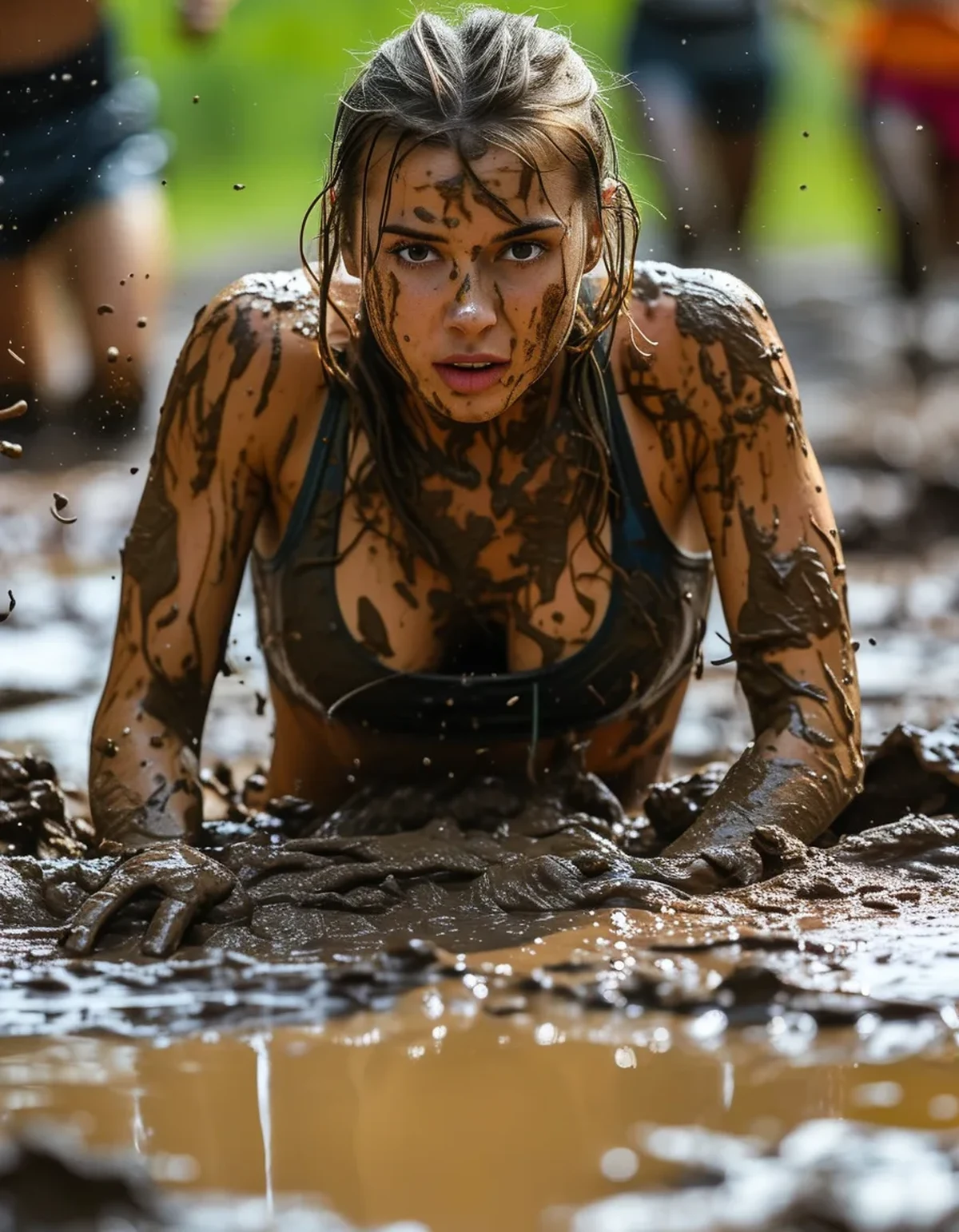
What actually happens inside your shoe after the first water crossing?
Three things, and they compound for the rest of the race.
You pick up weight. A padded trainer can hold 200 to 300 grams of water per shoe — over a pound total. Carried at the end of your leg, that weight costs disproportionately more than the same weight on your back, because you accelerate and decelerate it with every stride. Over five miles, it is a genuine pace tax.
Your skin starts softening immediately. Skin that stays saturated loses structural strength within about twenty minutes. Soft skin shears and blisters under friction that dry skin would shrug off. This is why blisters in obstacle races show up mid-race in places you have never blistered before.
The insole becomes a sponge. Even after the upper looks drained, a foam insole keeps releasing water back against your foot with every compression. That steady re-wetting is why your feet never quite feel dry again, even on long dry stretches between obstacles.
A fast-draining shoe interrupts all three. The weight leaves in the first minute of running, airflow through the mesh starts drying skin between crossings, and a thin, perforated insole stops the sponge cycle. None of that shows up when you study the outsole in a store.
Why does outsole grip matter less than the marketing says?
Because mud is the great equalizer.
On wet rock and hard-packed trail, rubber compounds genuinely differ. In soft mud, every compound slides, and traction comes from lug geometry instead — specifically from lugs that are spaced widely enough to shed mud between steps. A tightly-lugged aggressive outsole packs solid within a few strides and becomes a slick, whatever the rubber.
So among reasonable trail shoes, the mud performance gap is smaller than the ads suggest. What varies enormously is the other grip — the one inside the shoe.
When your foot is swimming in water, it slides across the insole on every off-camber step, every rope descent, every wall landing. You feel it as instability and blame the outsole, but the slip is happening between your sock and the footbed. No lug pattern fixes that.
Drainage restores internal grip twice over: less water means less hydroplaning inside the shoe, and a drier sock regains friction against the insole. Racers who switch from a waterlogged trainer to a draining shoe usually describe it as the shoe suddenly fitting better late in the race — same fit, less water.
The practical hierarchy for muddy courses: internal grip first, lug spacing second, rubber compound a distant third.
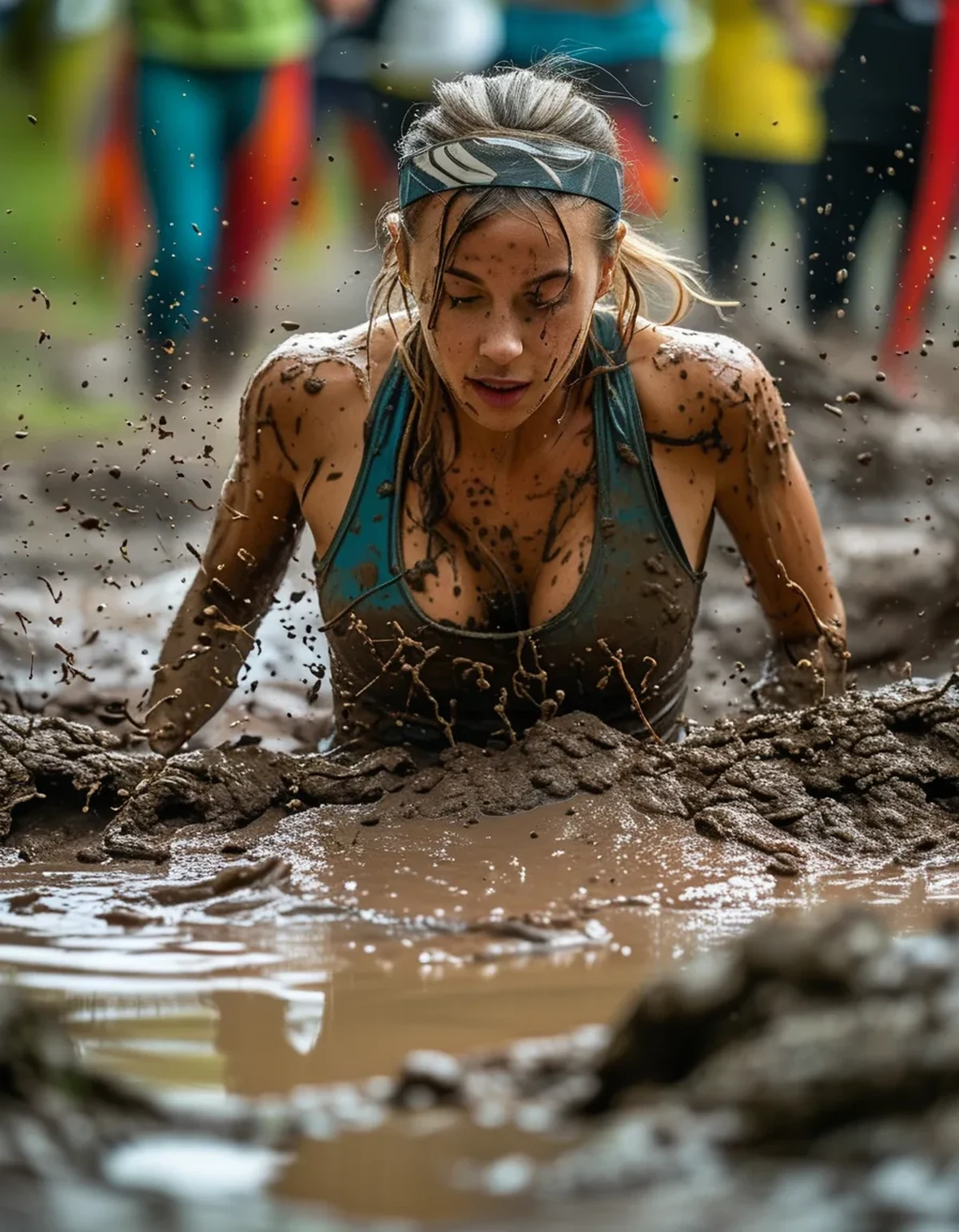
What Nobody Tells You About Wet Feet in a Race
The blisters are maceration blisters, not friction blisters. They form where soaked skin folds — under the arch, between toes — and prevention is drying time between crossings, not more tape. A draining shoe is the prevention.
Drainage ports are mostly decoration. Two small holes in the sole drain far less than an open mesh upper with minimal padding. Water leaves through the whole shoe or it does not really leave.
Your sock matters more than your shoe. A thin merino or synthetic blend holds a fraction of the water a cushioned cotton-blend sock holds, and it keeps some insulating grip when wet. Many experienced racers spend more time choosing socks than shoes.
The squelch is doing work. That pumping sensation on each step is water being forced out through mesh — in a draining shoe it fades within a few hundred meters. If you are still squelching a mile after a crossing, the shoe is holding, not draining.
Laces behave differently wet. Wet laces and a wet upper loosen together, usually within ten minutes of the first immersion. One planned re-tie after the first water obstacle prevents the heel lift that causes half the late-race hot spots.
How do you build and test a drainage setup before race day?
Choose for exit speed, then rehearse it wet.
Shoe: open mesh upper, minimal padded lining, low water absorption in the tongue, and a removable perforated insole. Padding is comfort in the store and a reservoir on the course.
Socks: one thin wool-blend pair, no cotton anywhere. If you race in calf sleeves or compression, the same rule applies — thin synthetics that release water.
Legs: snug beats loose when everything is soaked. Capri-length compression leggings or high-waisted leggings protect knees and shins through crawls, hold no meaningful water, and dry on the move — loose joggers become cold, heavy sandpaper after the first pit. If you would rather race in shorts, add knee sleeves for the crawls.
The test: two weeks out, stand in a filled bucket or hose your shoes down fully, then immediately run 800 meters. Count how long the squelch lasts, check where your foot slides, note whether the laces need a re-tie. Adjust one variable and repeat once. Ten minutes of unpleasant rehearsal converts race-day surprises into known quantities.
And break the setup in on at least three normal runs. A drainage-first shoe often has a firmer, lower feel than a cushioned trainer, and your calves should meet that before mile one of a race.
FAQ: Wet-Race Footwear, Answered
Do gaiters help in an obstacle race?
They keep gravel and debris out, which matters on sandy courses, but they do nothing about water and can slow drainage at the ankle. Use them for grit, not for wet.
Should I wear two pairs of socks?
No. Double socks are a dry-land blister strategy. Wet, they hold double the water and slide against each other unpredictably. One thin pair is the wet-course answer.
Are waterproof shoes a good idea?
They are the worst choice on a course with immersion. Water enters over the collar in the first pit and then cannot leave — you run the rest of the race in a sealed bag of water.
How tight should I lace once everything is wet?
Snug through the midfoot, relaxed at the toes. Wet feet swell slightly and toes need room, but a loose midfoot is what lets the foot slide. A quick mid-race re-tie is worth the fifteen seconds it costs.
TL;DR:
- A non-draining shoe carries roughly a pound of water and softens your skin into blister range.
- In real mud, lug spacing and internal grip beat rubber compounds — the slip you feel is usually inside the shoe.
- Open mesh, thin insole, one thin wool-blend sock, snug capri-length leggings for the crawls.
- Test the whole setup soaked, two weeks out, and plan one re-tie after the first immersion.
Before you buy anything new, hose down your current shoes and run two minutes. If the squelch outlasts the run, you have found your cheapest upgrade.
See It in Motion
Seen here: High Waist 8” Yoga Shorts — shop similar styles on bubblelime.com
Keep Reading
This article is for general informational and styling purposes only. Fit, sizing, and product availability may vary.