Why Your Hands Get Colder Than Everything Else in a Late Season Race
Quick Answer: Your body protects core temperature by shunting blood away from the extremities first, and hands lose that blood supply before anything else because they have a huge surface area relative to their mass and almost no insulating tissue. Wet skin accelerates it by evaporative cooling, and cold hands lose fine motor control and grip force long before they feel numb. The fixes are keeping the hands dry between obstacles, warming your core rather than your fingers, and doing grip work at the start of the race rather than saving it.
Which is why a race that felt easy in August becomes a grip management problem in October.
Why do the hands go first?
It is a deliberate physiological trade-off, not a failure.
Peripheral vasoconstriction is a core temperature defence. When your body detects cooling, it narrows blood vessels in the skin and extremities to reduce heat loss and keep warm blood central. Hands and feet are the first to be sacrificed because they contribute least to survival and lose heat fastest.
Hands have a terrible surface-area-to-mass ratio. Fingers are thin cylinders with large exposed surface and very little muscle or fat to buffer them. A finger cools several times faster than a forearm of the same skin temperature, which is why the gap between how your arms feel and how your hands feel widens so quickly.
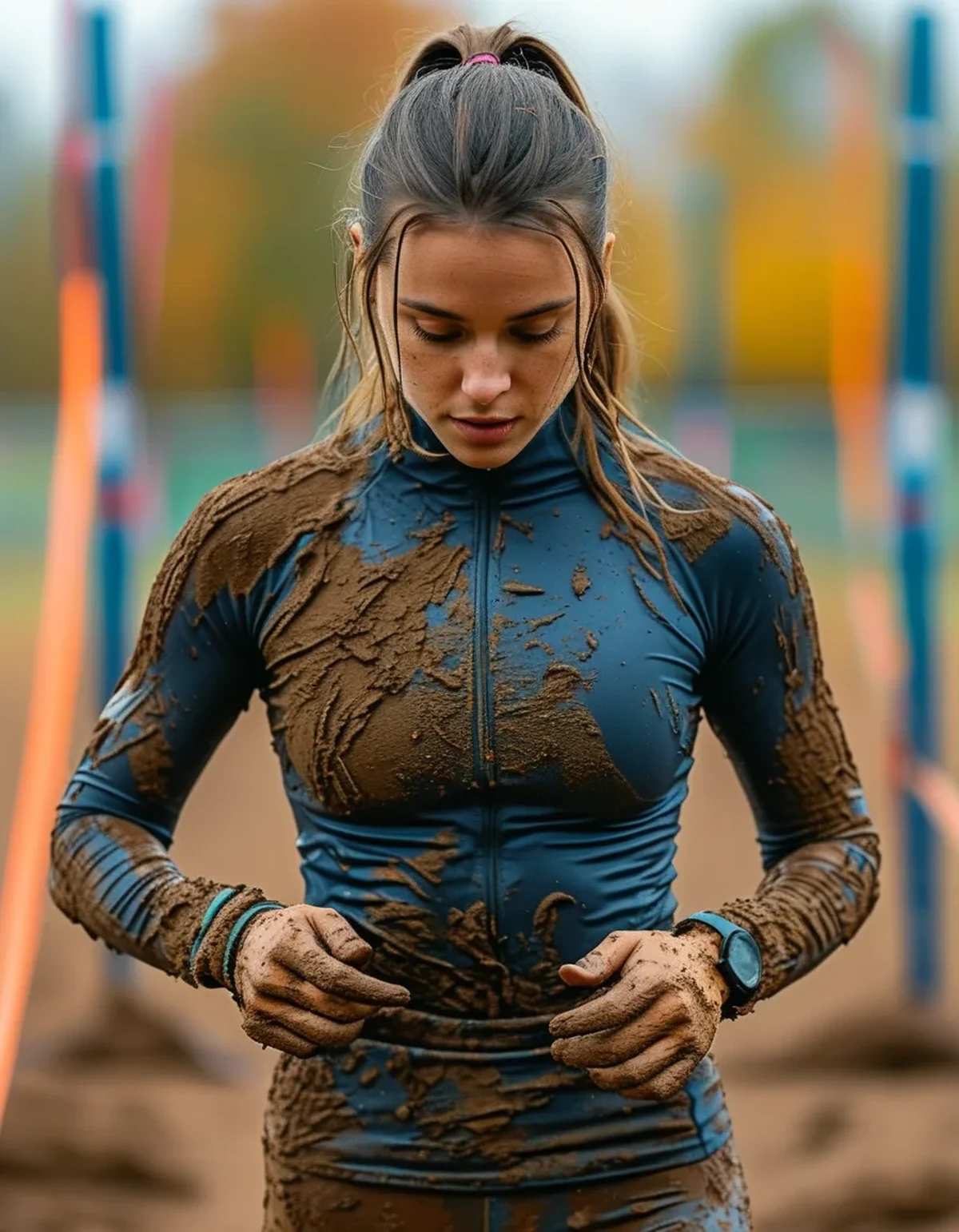
Wet skin multiplies the loss. Evaporation removes heat far faster than still air, and wind over wet hands is the single most efficient cooling combination on a course. This is why the section after a water obstacle, on an exposed field, in a headwind, is where grip reliably collapses.
And grip fails before numbness registers. Cooled muscle contracts more slowly and generates less force, and cooled nerves conduct more slowly. You lose maybe a fifth of your maximum grip force before your hands feel cold enough to worry about - which is why the failure arrives as a surprise on a rig you have done a dozen times.
What makes it worse than it needs to be?
Several avoidable things, all common.
Starting cold. Arriving at the start line with hands already chilled from standing in a queue means you begin the race with the vasoconstriction already engaged. Hands that start warm stay usable considerably longer, and warming them in the ten minutes before the gun is easier than recovering them at obstacle six.
Wearing gloves that hold water. A saturated glove is worse than a bare hand - it maintains a permanent wet layer against the skin and provides evaporative cooling continuously. Either wear something that sheds water fast or wear nothing.
Underdressing the core. This is the counterintuitive one. If your torso is cold, your body will keep your hands cold on purpose regardless of what you do to your hands. A thin thermal layer on the trunk does more for finger function than any hand-specific measure.
Carrying obstacles late in the race. Grip obstacles placed after the halfway point on a cold day fail at much higher rates than the same obstacle early. Course designers know this; racers often do not plan for it.
And gripping too hard, too early. Cold hands feel unreliable, so people over-grip, which fatigues the forearm flexors faster. The combination of cold-reduced force and self-inflicted fatigue is what produces the total failure people describe on the second rope.

7 Things That Actually Help
1. Warm the core before the start. A jacket until the last possible moment, and a short hard warm-up that raises core temperature. This is the highest-leverage single action and it costs nothing.
2. Keep hands out of the water where you have a choice. On low crawls and water carries, small route decisions matter. Every unnecessary submersion costs you grip later.
3. Dry between obstacles. Wiping your hands on any dry fabric you have - inside of a sleeve, waistband, a dry patch of shirt - removes the evaporative layer and buys back real function. Do it approaching every grip obstacle, not after.
4. Shake and swing, do not rub. Vigorous arm swings force blood into the hands mechanically. Ten hard arm circles does more than a minute of rubbing your palms together.
5. Front-load the grip work in training. If you know cold reduces your grip force meaningfully, train grip at the end of sessions when fatigued so your reserve is deeper. Dead hangs and farmer’s carries after a run beat fresh grip work for this.
6. Choose your glove honestly. A thin, close-fitting glove that sheds water can help. A padded, absorbent one is worse than nothing. Test in training in wet conditions before race day, never on the day.
7. Adjust your obstacle order strategy. If the course allows any choice, do the grip-dependent obstacles while your hands still work. Saving them for later is a plan that assumes hands that will not be there.
The third point is the one experienced racers rate highest and beginners never do - drying on approach rather than arriving wet.
How do you train for cold grip specifically?
You can build a real buffer in about six weeks.
Train grip in the cold, deliberately. Dead hangs outdoors on a cold morning, ungloved. Cold adaptation for the hands is a real phenomenon - repeated exposure improves blood flow response and reduces the severity of the vasoconstriction over weeks. Start at 30 seconds and build.
Build absolute grip endurance so the loss matters less. If your maximum hang is 90 seconds and cold costs you a fifth, you still have 72. If your maximum is 30 seconds, the same proportional loss puts you under most obstacle requirements. Absolute capacity is the buffer.
Train the forearm in both directions. Most people only train flexion - the closing grip. Adding extensor work with a rubber band around the fingers reduces the forearm pump that cold and over-gripping produce together, and it takes two minutes.
Practise wet. Wet a rope or bar and train on it. The technique adjustments for a slick surface are learnable - more contact area, slower controlled movement, hooking rather than pinching - and they are much easier to learn in training than on a rig with a queue behind you.
And practise the transitions. Get cold, then do something demanding. The specific skill of performing when your hands feel unreliable is trainable, and it is largely a confidence and technique adaptation rather than a physiological one.
This is general information, not medical advice. Numbness that persists after warming up, or fingers that go white and then blue, is worth having checked - Raynaud’s and other circulatory conditions change the calculus considerably.
FAQ: Cold Hands in Obstacle Racing, Answered
Why do my hands hurt more when they warm back up?
That is reperfusion - blood returning to tissue that was constricted. It is normal and usually passes in a few minutes. Warming gradually rather than plunging hands into hot water reduces the severity.
Are gloves worth it in an obstacle race?
Only thin, water-shedding ones, and only if tested in training. Absorbent or padded gloves hold water against the skin and cool your hands faster than going bare.
How much grip do you actually lose in the cold?
Enough to matter - measurable reductions in maximum grip force start well before hands feel painfully cold. The practical effect is that a rig you clear comfortably in summer becomes marginal.
Why do my forearms pump so badly in cold races?
Partly cold-reduced muscle efficiency, and largely over-gripping because the hands feel unreliable. Relaxing grip pressure between holds and training extensors both help.
Should I skip water obstacles if I can?
Where the rules allow a route choice, keeping hands dry before a grip obstacle is a legitimate strategy. Where they do not, dry your hands on approach instead.
Does cold adaptation actually work?
Yes, to a degree. Repeated cold exposure over weeks improves the blood flow response in the hands. It is a training effect like any other and it fades without maintenance.
TL;DR:
- Your body sacrifices hand blood flow first to protect core temperature, and fingers cool fastest because of their surface-area-to-mass ratio.
- Grip force drops before your hands feel cold, which is why the failure feels sudden.
- Warming your core beats warming your fingers - a cold torso keeps your hands cold on purpose.
- Practical wins: dry hands on approach to every grip obstacle, arm swings not rubbing, thin water-shedding gloves or none, and grip obstacles early where you have the choice.
- Train absolute grip endurance, extensors, wet-surface technique, and cold exposure for a six-week buffer.
The hands were always going to be first. Building a bigger reserve and losing less of it to wet skin is the whole game.
This is general information, not medical advice.
Keep Reading
This article is for general informational and styling purposes only. Fit, sizing, and product availability may vary.